


When it comes to investing in stocks in India, the two biggest names you’ll hear are the National Stock Exchange (NSE) and the Bombay Stock Exchange (BSE). As someone who has spent years exploring investment avenues and helping others make sense of the markets, I know firsthand how confusing it can be to decide where to focus your trading efforts. In this article, I’ll walk you through a detailed, unbiased comparison of NSE and BSE—blending historical context, market data, and real user experiences from forums—so you can make confident, informed choices about your investments.
Quick Summary
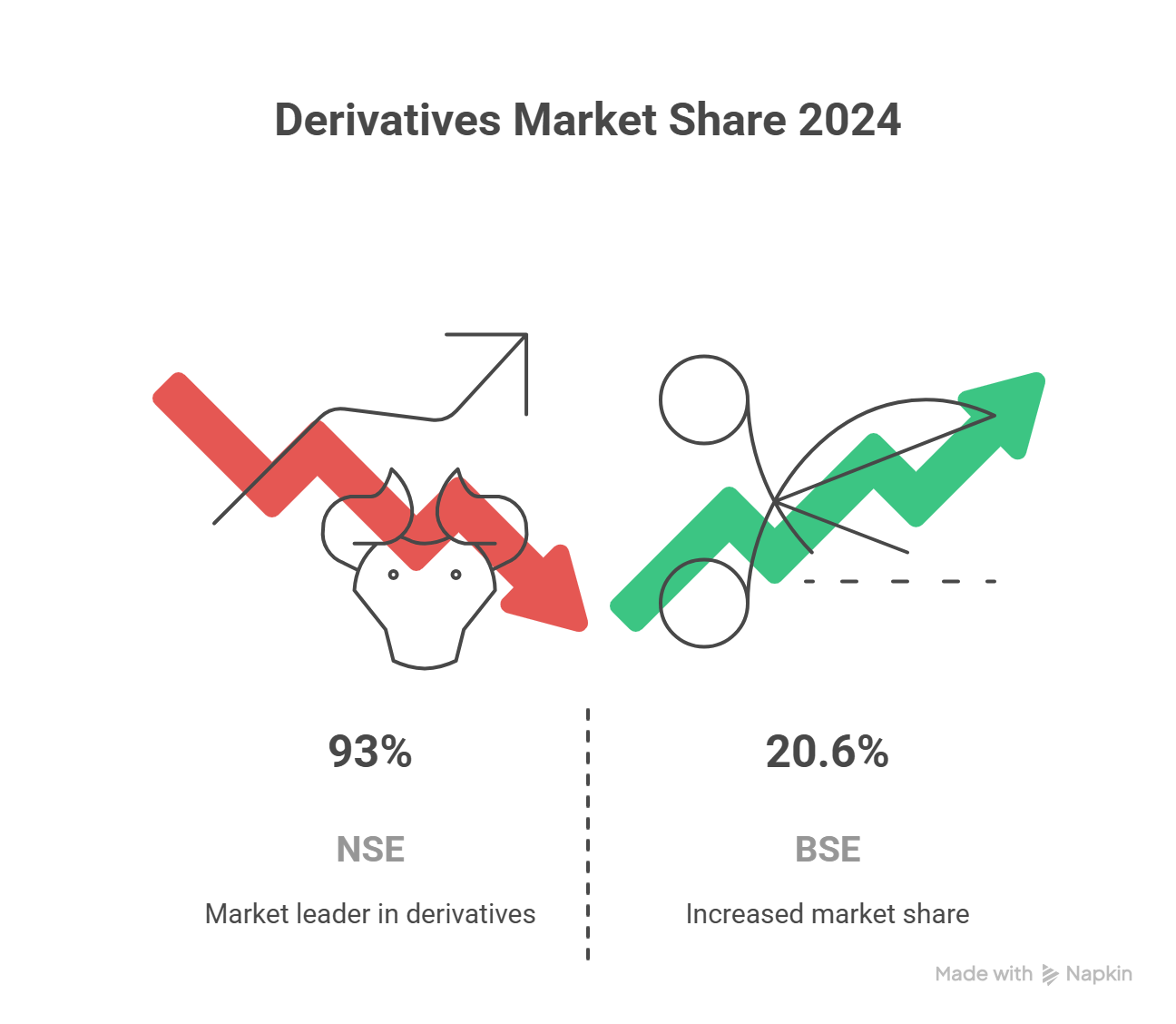
- NSE is the market leader in both cash equity (93% share) and derivatives (near-monopoly), with unmatched liquidity and technology.
- BSE is Asia’s oldest exchange, with more listed companies, greater SME focus, and recent innovations in derivatives.
- Trading volumes, market cap, and investor profiles differ—NSE attracts more institutions and high-frequency traders; BSE appeals to small/mid-cap enthusiasts and long-term investors.
- Both exchanges are regulated by SEBI, but strategies, technology, and listing processes differ.
- Your ideal exchange depends on your goals: NSE for speed and liquidity, BSE for breadth and emerging companies.
Introduction to India’s Stock Exchanges
Stock exchanges are critical to the functioning of any economy. They provide a transparent platform for buyers and sellers to trade company shares, channel savings into investments, and drive both economic and personal growth. In India, the two giants—NSE and BSE—not only symbolize this financial infrastructure but also shape the very landscape of our capital markets. Whether you’re an active trader using algorithms or a long-term investor hunting for hidden gems, understanding the differences between these two exchanges is key to maximizing your returns and minimizing risk.
Historical Background
BSE’s journey dates back to 1875, making it Asia’s oldest stock exchange. What began as a gathering of 22 brokers under a banyan tree in Mumbai has grown into a sprawling marketplace supporting India’s economic evolution—from colonial days, through independence, to modern liberalization. NSE, by contrast, was formed in 1992 to bring greater transparency and technology to Indian markets. The arrival of the National Stock Exchange completely transformed the trading experience—ushering in electronic, screen-based systems and professional standards in a sector long dominated by open-cry and handwritten ledgers.
Structure and Organization
BSE and NSE are both professionally managed, but their ownership and strategies differ. NSE is a demutualized exchange originally set up by a consortium of financial institutions. It is now preparing for a massive IPO aimed at global expansion. BSE is a listed entity itself, trading on its own platform, and known for a more traditional corporate structure. NSE adopted end-to-end automation and high-speed infrastructure early on, making it a global benchmark for electronic trading. BSE, while quick to modernize with BOLT (its electronic platform), retains strong connections to India’s diverse business ecosystem—particularly for small and mid-sized corporates.
Side-by-Side Comparison Table: NSE vs BSE
| Parameter | NSE(National Stock Exchange) | BSE(Bombay Stock Exchange) |
| Year Established | 1992 | 1875 |
| Benchmark Index | Nifty 50 | Sensex |
| Market Capitalization (Nov 2024) | Rs. 470 lakh crore | Rs. 359 lakh crore |
| Avg. Daily Turnover (June 2023) | Rs. 67,491 crore | Rs. 5,157 crore |
| Listed Companies | ~2,300 | ~5,800 |
| Dominant In | Cash equities, derivatives (93% market share) | Listings (esp. SME), derivatives growth (20% share) |
| Key Investor Base | Institutions, high-frequency traders | Retail, long-term, SME investors |
Market Capitalization and Trading Volumes
The gap in daily turnover between NSE and BSE is striking: by June 2023 numbers, NSE processes orders worth nearly Rs. 67,491 crore per day—over 13 times BSE’s Rs. 5,156.67 crore. This dominant liquidity is self-reinforcing: as one r/IndiaInvestments Redditor noted, “99% of big institutions route their trades through NSE, so bid-ask spreads are tiny and slippage is rare.” Yet BSE isn’t to be underestimated. It lists more than 5,800 companies (the highest in the world) and, thanks to aggressive fee cuts, has increased its derivatives market share from 8% to an impressive 20.6% in 2024, according to Religare Online.
Indices Comparison: Nifty 50 vs Sensex
The Nifty 50 and the Sensex are India’s two flagship indices—tracking the largest and most actively traded companies on NSE and BSE, respectively.
- Nifty 50 tracks the top 50 companies across diverse sectors and is often used as the primary performance benchmark by mutual funds and institutions.
- Sensex comprises the top 30 BSE-listed stocks, offering a snapshot of Indian “blue chip” performance. It’s the oldest barometer and carries historical cachet among investors.
Methodologically, both indices use free-float market cap weighting, but Nifty 50 has broader sector representation and more regular rebalancing. In practice, returns between the two are highly correlated, but liquidity on Nifty makes it the dominant hedging tool.
Trading Mechanisms and Technology
If there’s one thing that sets NSE apart, it’s technology. From its inception, the exchange deployed a fully electronic, order-driven system that allowed real-time price discovery and risk management. NSE’s low-latency trading attracts high-frequency and algorithmic traders, with data feeds and co-location services underpinning an ecosystem unrivaled in the region. BSE responded with its BOLT trading system, enabling rapid modernization and digital access across its vast broker network. Both exchanges now offer T+1 rolling settlements (your trades settle the next working day), but the sheer speed and reliability of NSE’s matching engine remains the gold standard for serious market participants.
Listing Requirements and Procedures
For companies seeking to go public, requirements on NSE are generally more stringent than those on BSE. NSE is often seen as the preferred bourse for large, stable firms targeting institutional investors, while BSE is a leader for SME listings via its SME and Startups sub-segments. Costs and regulatory scrutiny can vary, with BSE offering lower entry barriers for emerging businesses. Experienced company secretaries on ValuePickr forums write, “SMEs favor BSE for faster approval and more flexible listing criteria.”
Regulatory Environment
Both exchanges fall under the purview of the Securities and Exchange Board of India (SEBI), which enforces fair market practices and investor safeguards. However, SEBI’s recent move to unify broker fee structures across exchanges levels the playing field—removing volume-based rebates that once favored larger NSE members.
NSE, as the market leader, faces closer scrutiny of its technology stability and surveillance systems—while BSE leverages regulatory flexibility to innovate in new segments, like ESG and SME.
Investor Access, Education, and User Experience
The democratization of trading is a hallmark of NSE’s legacy. Its digital platform now extends reach to over 1,500 Indian cities, with advanced tools for analytics, back-testing, and execution that benefit retail and institutional investors alike. BSE’s network is slightly narrower but provides a friendly environment, with dedicated educational programs and easier onboarding for first-time investors. User reviews and forum posts regularly note that while NSE is the place “where the action happens,” BSE’s platform is “better for exploring under-researched stocks or SMEs.” Brokers usually allow access to both bourses; you can choose at order placement.
Financial Performance and Growth Prospects
Financial analysts frequently point out a curious paradox: NSE is much larger and more profitable by revenue (Rs. 11,900 crore vs BSE’s Rs. 2,574 crore), but BSE commands a higher valuation multiple due to its faster anticipated growth from a smaller base. As per Equitymaster, BSE’s expected growth rate stands at 17% vs NSE’s 12% for 2024, with BSE’s operational margin surging from 24% to 54% in recent years. On forums like ValuePickr, users speculate: “BSE is like a high-growth underdog… if it sustains fee competitiveness, it could give 10x returns in a couple years.” Still, the market capitalization remains tilted towards NSE due to its scale and established cash-flow supremacy.
Beyond-Common-Sense Facts About NSE and BSE
- Nearly all institutional derivatives trading in India happens on NSE: It has a virtual monopoly, processing over 93% of cash equities and almost all key index derivatives by volume.
- BSE is the world’s largest exchange by number of listed companies: Hosting over 5,800 firms, it’s unmatched worldwide for variety and access, especially for growth-focused investors.
- BSE’s derivatives revival is recent and dramatic: In just over two years, BSE has jumped from 8% to over 20% derivatives market share, thanks to aggressive trading fee cuts.
- NSE’s technology investment pays off globally: Its trading engine processes millions of orders per second, making it a model for emerging market exchanges everywhere.
- Transaction fees and charges can be lower on BSE for certain trades: This makes it attractive for small investors or those looking to minimize execution costs on lesser-traded stocks.
Which Stock Exchange Is Better for You?
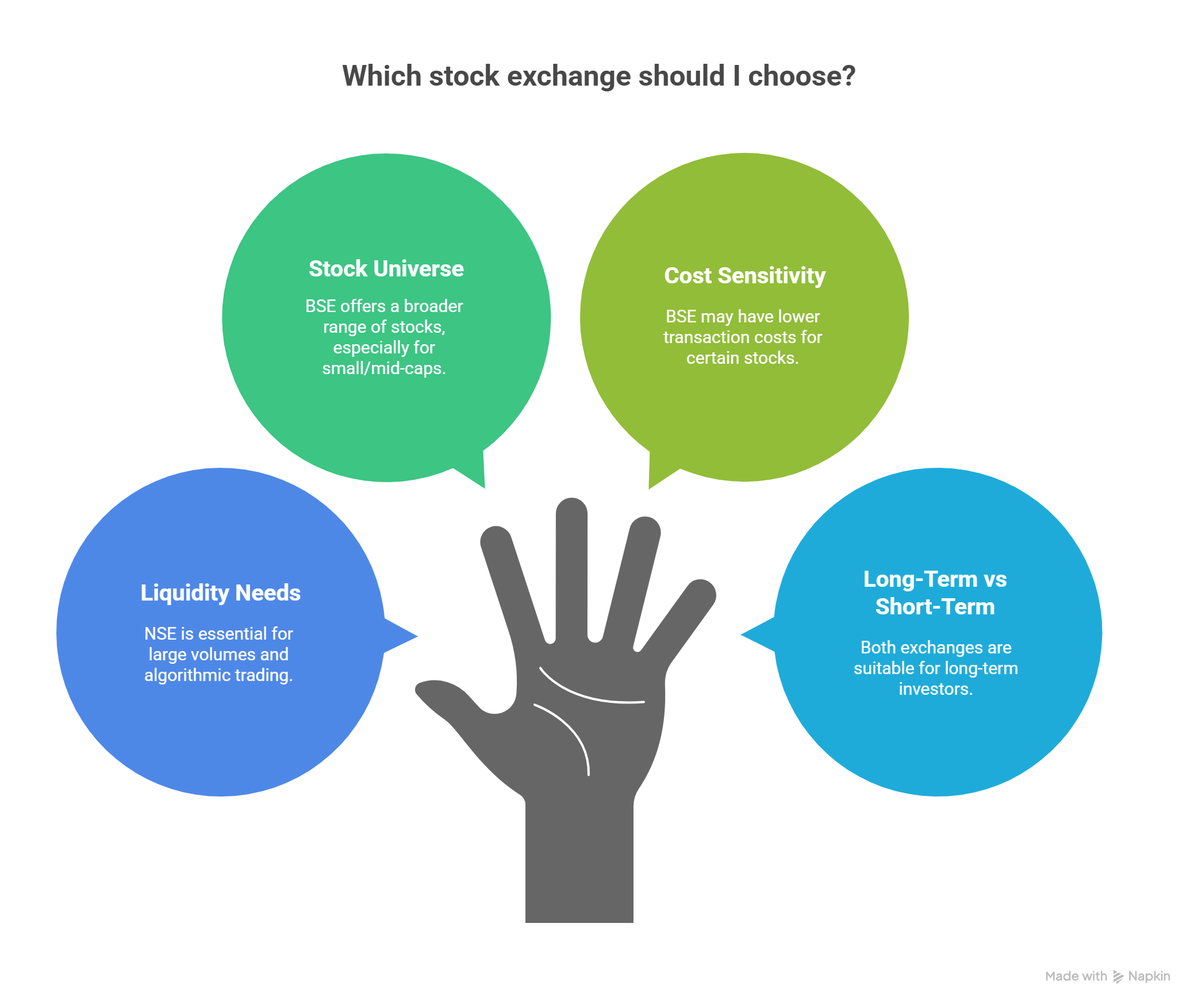
NSE and BSE are not mutually exclusive. Your choice depends on:
- Liquidity Needs: If you’re trading large volumes or running algorithms (intraday or derivatives), NSE is virtually essential for execution and risk management.
- Stock Universe: Interested in new listings, small/mid-caps, or SME IPOs? BSE offers an unmatched breadth, with easier access for smaller firms.
- Cost Sensitivity: For certain stocks, BSE’s transaction costs might be lower—especially during promotional fee periods.
- Long-Term vs Short-Term: Long-term investors can comfortably buy on either exchange, as both have reliable settlement and custodial processes.
Ultimately, most seasoned investors use both exchanges—choosing based on the specific stock, order size, and liquidity at the time of trade.
Conclusion
In my own investing journey—and through countless hours of research, forum discussion, and direct experience—I’ve come to see the NSE–BSE rivalry as a blessing for Indian investors. NSE drives innovation, liquidity, and operational efficiency, making India a world leader in electronic trading. BSE, steeped in history, brings breadth, inclusivity, and a fertile platform for India’s emerging businesses to go public.
Let me recap our step-by-step process to compare these two major markets:
- We explored each exchange’s history, structure, and technology.
- We laid out a side-by-side table to make it visual and simple.
- We highlighted trading volumes, market cap, and the unique strengths of flagship indices.
- We delved into who each exchange serves best: institutions and traders (NSE); retail and SMEs (BSE).
- We investigated regulatory, cost, and listing nuances to help both investors and companies.
- Finally, we identified five advanced, lesser-known truths to power your next investment move.
I’d love to hear about your experience: Do you prefer the high-tech speed of NSE or the broad reach and heritage of BSE? What has worked for you in real trades or portfolio building? Leave your thoughts, questions, or tips in the comments below—let’s learn from each other and grow together!
References
- Smallcase.com – NSE vs BSE
- mStock – NSE vs BSE: Full Comparison
- Zerodha Fund House
- Tickertape – BSE vs NSE
- Upstox – NSE vs BSE
- Bajaj Finserv – NSE vs BSE
- Equitymaster: Is BSE a Better Bet than NSE?
- Appreciate Wealth – NSE Vs BSE
- Angel One – NSE or BSE?
- YouTube: NSE vs BSE | Latest Market Cap Comparison
- Share.Market – NSE vs BSE
- JM Financial – NSE vs BSE
- Kotak Securities – Should I Trade on NSE or BSE?
- ValuePickr – NSE Unlisted Shares Discussion
- Religare Online – NSE vs BSE Derivatives Market Share
- Equitymaster – NSE Monopoly in Derivatives