

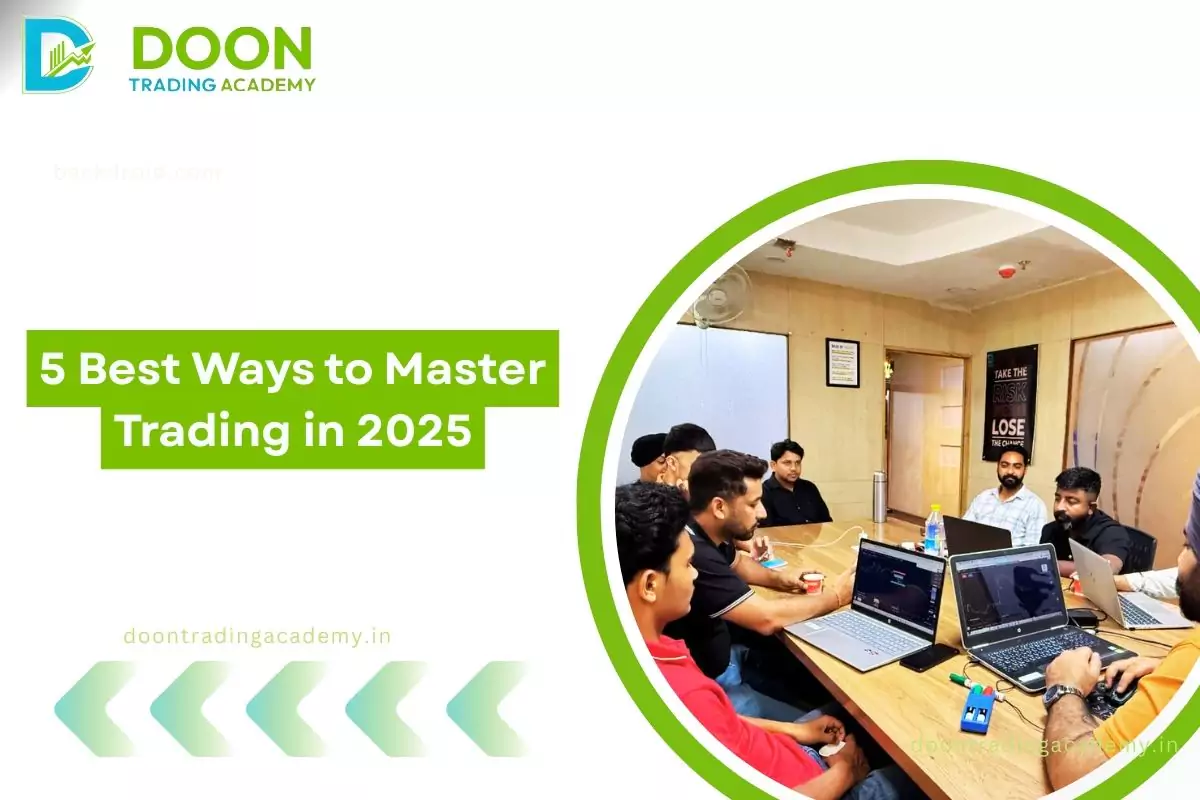
Learning to trade stocks in 2025 is more accessible than ever—but also more dynamic and complex. With rapid advances in technology, the rise of AI, and global connectivity, mastering trading goes beyond traditional study. In my own experience, successful stock market learning requires a blend of foundational understanding, modern tools, and ongoing community engagement. In this article, I’ll guide you through the five best ways to master stock trading this year, combining expert insights, proven strategies, and emerging trends to help you build practical skills that last.
Quick Summary

- Start with paper trading to practice risk-free in real market conditions.
- Complete structured online courses for in-depth, guided knowledge.
- Leverage AI-powered tools for personalized, real-time learning.
- Read key investment books to build timeless, foundational wisdom.
- Diversify your approach by engaging in multi-strategy learning and active trading communities.
Understanding the Basics: Foundation for Success
Stock market success starts with understanding the core fundamentals: stocks, shares, trading, and volatility. Knowing what a stock represents—a unit of ownership in a company—gives meaning to every transaction. Terms like “volatility” describe the market’s price swings, while market indexes (such as the S&P 500) track overall performance.
Interpreting financial statements and annual reports is vital for making informed choices. Beginners benefit from resources like “The Intelligent Investor” and modern, interactive online tutorials. A solid foundation helps you discern credible advice and avoid costly missteps.
Method 1: Paper Trading – The Foundation of Risk-Free Learning
Paper trading offers new traders a safe way to practice and refine strategies without risking real money. Virtual trading platforms simulate . market conditions, letting you experience market swings and test your emotional discipline. As noted on community forums, “Paper trading saved me from blowing up my first account—priceless learning with zero actual loss.”
—u/SavvySim on Reddit.
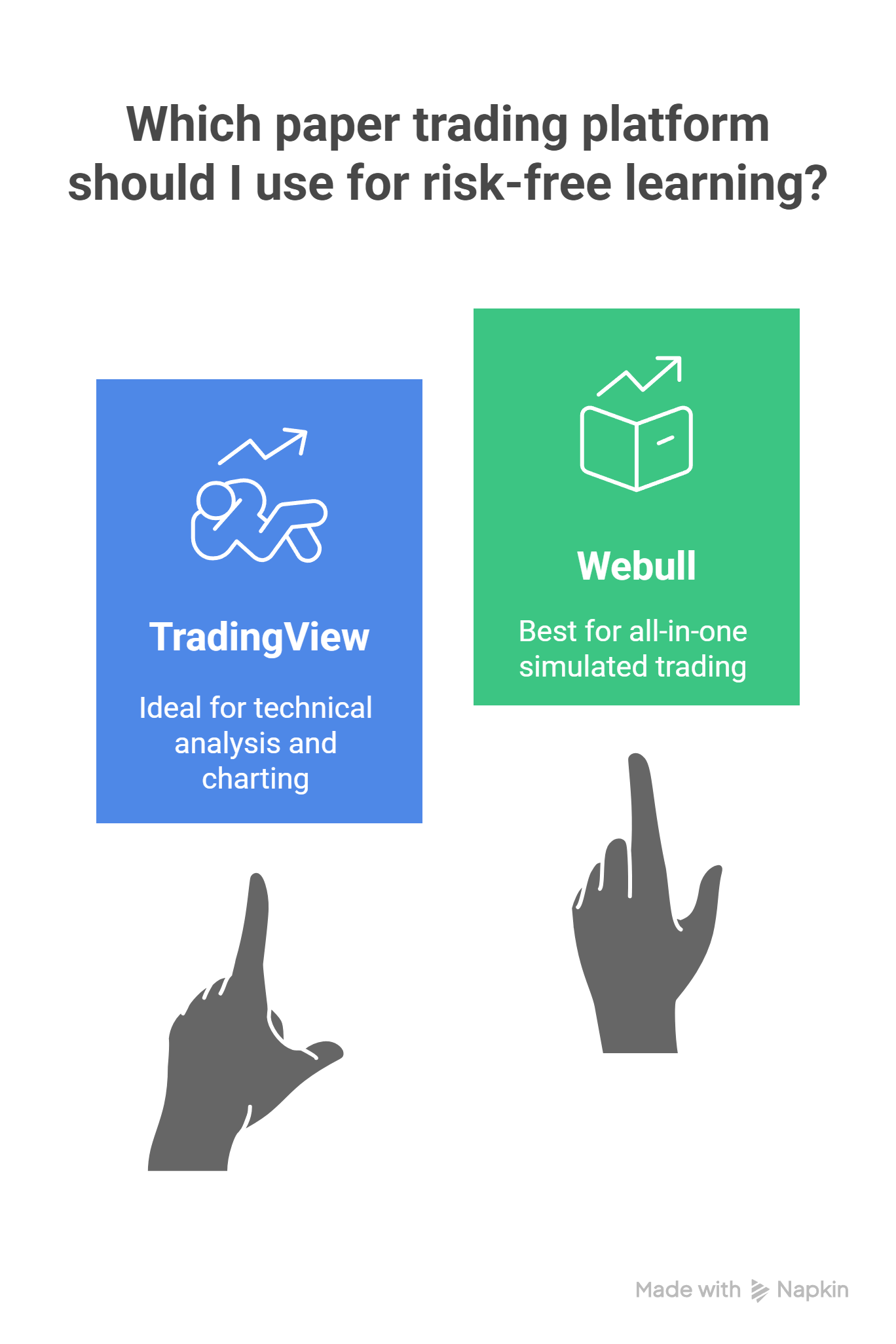
TradingView is highly recommended for its deep technical analysis tools, while Webull appeals to those wanting to try stocks, ETFs, options, and futures. Simulators like Investopedia’s also remain popular for beginners. These platforms provide real-world trading environments, minus the financial pressure—which is crucial for building confidence and discipline.
| Platform | Best For |
|---|---|
| TradingView | Technical analysis and charting |
| Webull | All-in-one simulated trading (stocks, options, futures) |
Method 2: Structured Online Courses and Certification Programs
Structured online courses provide a guided path, comprehensive content, and direct access to experts. In 2025, education platforms like Investopedia Academy, Coursera, and Fidelity have diversified and upgraded their offerings. Investopedia Academy features over 40 expert-led courses with self-paced structures, covering everything from basic trading concepts to advanced strategies and niche topics like options and crypto.

For those seeking university-backed credibility, Coursera’s partnerships with institutions like Yale and the University of Michigan offer in-depth, academically rigorous courses. Completion rates and positive learner outcomes are notably higher in structured, modular programs, with many students citing certifications as a catalyst for job advancement or personal trading success.
| Platform | Highlights |
|---|---|
| Investopedia Academy | Expert instructors, lifetime access, modular tracks |
| Coursera | University partnership, academic rigor, certification |
Method 3: AI-Powered Personalized Learning
The next evolution for stock market learning is artificial intelligence. AI platforms now customize content de.ry, analyze your trading behavior, and answer complex questions instantly. Tools like Gainify can sift through vast market data and provide tailored explanations, helping you target your weaknesses and deepen your strengths.
Reddit discussions highlight how AI tutors have boosted user engagement. For example, “I get specific answers for my trading questions 24/7; it’s changed how fast I learn.” — u/AItradesensei. By adapting lessons in real time and providing feedback, AI blurs the line between teacher and digital assistant—making learning faster, more interactive, and increasingly effective.

- Personalized feedback based on trading simulations
- Real-time answers and market insights
- Integration with traditional theory for a holistic approach
Method 4: Time-Tested Literature and Fundamental Knowledge
Despite all the advances in e-learning and AI, classic investment books remain invaluable. These texts teach not just practical strategies, but mental models and investing philosophy that withstand market cycles. Many top investors, including Warren Buffett, continually emphasize the role of lifelong learning from books.

- The Intelligent Investor (Benjamin Graham) – timeless guide to value investing
- One Up on Wall Street (Peter Lynch) – applying real life to market opportunities
- A Beginner’s Guide to the Stock Market (Matthew R. Kratter) – accessible primer for novices
Reading, reflecting, and applying these lessons ensures your foundation remains strong—no matter how markets evolve or how technology advances around you. Or you can simply join the Doon Trading Academy for learning purpose.
Method 5: Multi-Strategy Integration and Community Engagement
The most effective learning in 2025 is not one-dimensional. Combining multiple strategies—such as fast-paced momentum trading, medium-term swing approaches, and long-term trend following—lets you adapt to shifting conditions. As one forum user explained, “Trying every major strategy on paper before putting down real cash kept my risk low and taught me what fits my style.” — u/StrategyShift
Active participation in trading forums, Discord groups, and online seminars provides fresh perspectives and reality checks. New platforms and communities are emerging that focus on real-time analysis, group learning, and trader accountability partners. These help solidify your understanding and connect you with mentors and like-minded traders.
| Strategy Type | Typical Timeframe |
|---|---|
| Scalping, Day Trading, Momentum | Seconds to hours |
| Swing, Mean Reversion | Days to weeks |
| Trend-following, Position Trading | Weeks to years |
The Role of Continuous Learning and Adaptation
Stock market conditions and tools change constantly. From my experience, the key to mastery is adaptability—staying informed about new trends, emerging instruments, and innovative methodologies. I rely on daily updates from sites like MarketWatch for market news and keep learning through podcasts, webinars, and breaking news from CNBC and Bloomberg.
Pursuing lifelong learning means regularly revisiting both foundational principles and the latest technology/trading developments. Setting aside even 15 minutes a day for ongoing education makes a measurable difference over time.
Advanced Insights: Five Beyond-Common-Sense Facts
- Paper trading not only reduces financial risk but sharpens emotional discipline—crucial for managing real money swings.
- Courses that feature project-based, interactive modules have completion rates up to 30% higher than purely theoretical ones.
- AI-powered market learning tools now adapt to your personal weaknesses, offering bespoke mini-lessons based on your trade history.
- Some of the most successful traders in 2025 report using at least three different learning modalities in tandem for the fastest skill acquisition.
- Peer learning in trading communities statistically shortens the time to profitability for beginners, thanks to rapid feedback and diverse strategy exposure.
Conclusion
Looking back at my trading journey, I can confidently say no single learning method is a magic bullet. My path started with paper trading to experiment risk-free, then moved to structured courses and relentless reading of investing classics. Incorporating AI-powered feedback and engaging in real trader communities accelerated my growth more than any one approach could have. Here’s the step-by-step recap I suggest:
- Open a demo trading account and practice consistently.
- Enroll in 1–2 structured online certification courses for core knowledge and up-to-date strategies.
- Supplement your study with AI-driven tools for personalized feedback and fast answers to complex questions.
- Devote time each week to classic investment literature—absorb their mindset and lessons.
- Engage in active trading communities for peer support, mentorship, and continuous improvement.
I encourage you to create a system that fits your goals and schedule and to start today, no matter your experience level. Your best trading years are ahead—so leave a comment below with your favorite learning resource or your biggest trading question, and let’s learn together.