

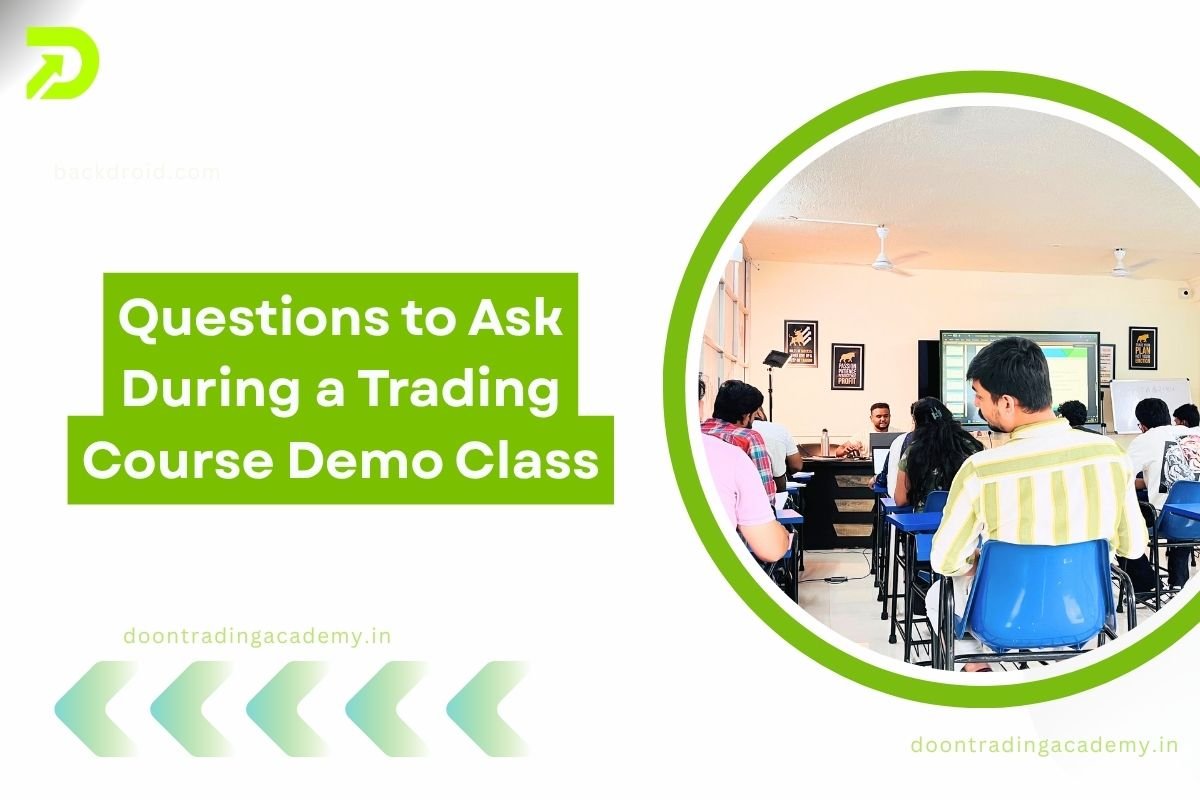
I sign up for demo classes to judge whether a trading course matches my learning goals, risk tolerance, and technical needs before committing. A demo class should be more than a sales pitch: it should show the instructor’s process, platform behavior, and how the course will teach you to trade in real market conditions.

- What to focus on during the demo and why each area matters.
- Key questions to evaluate curriculum, instructor credibility, and platform features.
- Red flags that suggest the demo is primarily a marketing tool.
- Advanced, evidence-based checks that most attendees overlook.
- Simple troubleshooting steps if the demo doesn’t demonstrate what it promises.
Why a demo class matters
A short demo can reveal the instructor’s teaching style, the level of practical content, and whether the course materials align with your current skill level. In my experience, the best demos include . trade walk-throughs, clear explanations of edge and risk management, and examples of homework or assessments students complete.
Pre-demo checklist
Technical setup
Confirm the platform (Zoom, Teams, proprietary platform), required system specs, and whether the demo will show the actual trading interface or a slide deck. If possible I test audio and screen-sharing before the session.
Know your goals
Decide what you want from the course: strategy development, risk management, algorithmic trading, or options pricing. That allows targeted questions rather than general ones that waste time.
Core questions to ask during the demo
Curriculum and outcomes
- What are the specific learning outcomes by module, and how are they assessed?
- Can you show a real example of a student assignment and the typical feedback they receive?
- How do you bridge theory and practice—are there paper-trading assignments, simulated sessions, or . trade reviews?
Instructor credentials and transparency
- Do you trade the strategies you teach on a personal/. account? Can you show verifiable performance records or audited statements?
- What professional or regulatory credentials do you and your instructors hold?
- How much of the instruction is de.red by the course author versus junior coaches?
Platform, tools, and data
- Which trading platform and data feed will students use? Will the demos use the same . data and order routing that students will have access to?
- Are there integrations for backtesting, replaying trades, or visualizing execution (slippage, fills)?
- What are the system requirements for indicators, scripts, or custom tools taught in the course?
Strategy specifics and risk management
- Can you show a full trade lifecycle from signal to exit, including stop placement and position sizing calculations?
- How do you teach drawdown management and risk-of-ruin calculations for different account sizes?
- What is the expected win-rate, average risk-to-reward, and required sample size students should expect before drawing performance conclusions?
Support, community, and continuing education
- What kind of ongoing support is included—office hours, mentor calls, private chat? How responsive is the support team?
- Are there active community channels (Discord, forum) and can you show a recent example of community-driven learning or trade review?
- What upgrades or refresher materials are available after the course ends?
Pricing, guarantees, and refund policy
- Are trial lessons free and are there conditional guarantees or refund windows? Where are these policies documented?
- Are ongoing fees required for data, platform, or mentorship, and what are typical recurring costs?
What to watch for during the demo (red flags and green flags)
Green flags
- Instructor demonstrates . trade examples and explains decision-making step-by-step.
- Clear, documented syllabus with measurable outcomes and examples of student work.
- Transparent answers about performance, limitations, and market conditions where the strategy works best.
Red flags
- Heavy emphasis on past performance without verification, emotional marketing language, or promises of guaranteed income.
- Instructor refuses to show a . platform or provides only hypothetical trades with no execution data.
- Vague support commitments or hidden recurring costs that aren’t disclosed upfront.
Here is How to Identify a Genuine Trading Institute: 12 Red Flags.
Advanced insights: five beyond-common-sense checks
These are technical, evidence-based checks that separate marketing from legitimate instruction.
- Ask whether the demo uses simulated fills or real exchange fills—simulated fills hide slippage and execution latency issues.
- Request slippage and commission assumptions used in backtests; small differences here can flip profitability.
- Verify whether the instructor uses walk-forward testing or only in-sample backtests—walk-forward reduces overfitting risk.
- Ask how many independent trades (not days) are needed before statistical confidence in a strategy is reasonable; many instructors underestimate sample size needs.
- Confirm if the course includes access to trade replays or tick-level data for practice; replay capability materially speeds skill acquisition.
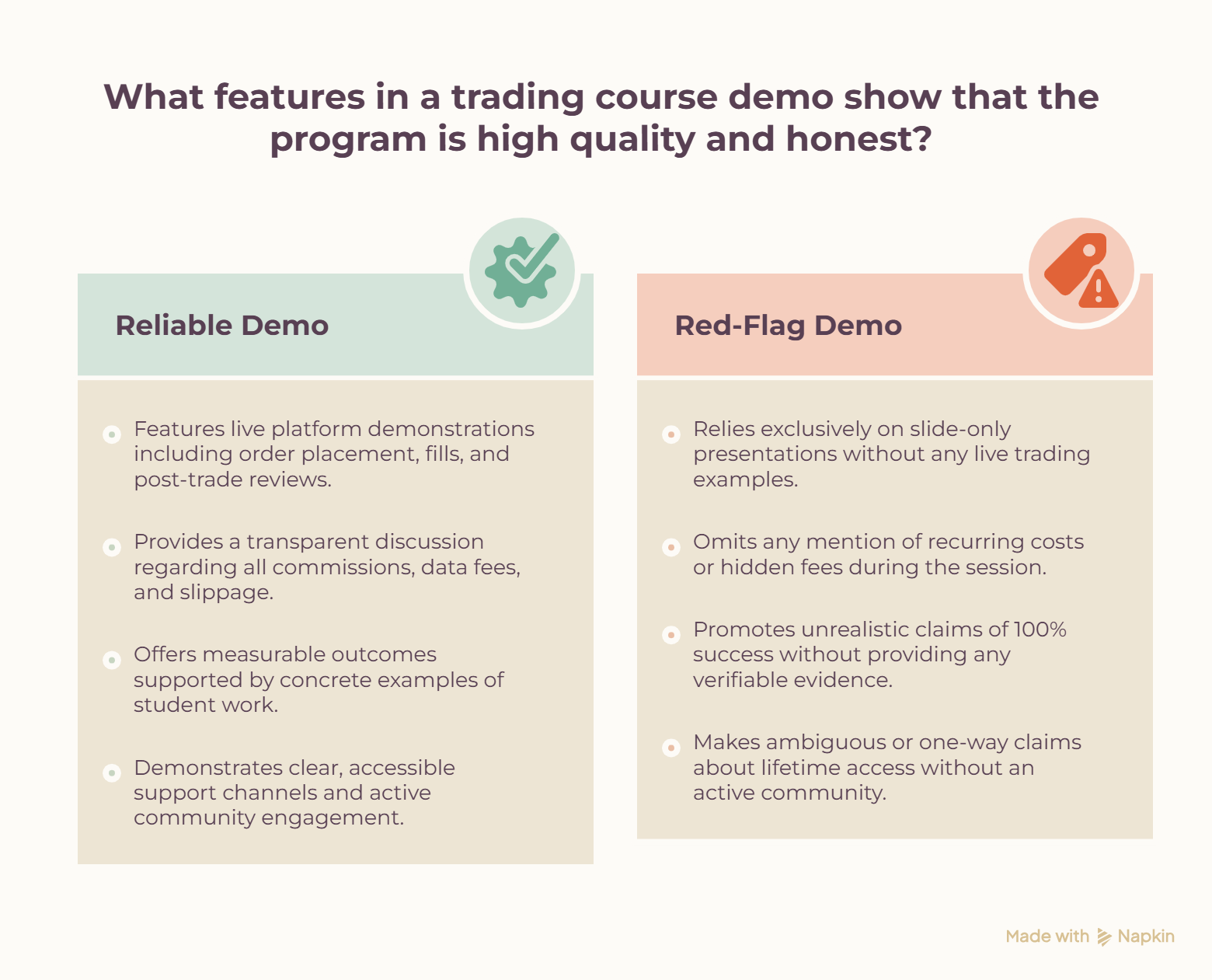
Comparison: demo features versus common red flags
| What a reliable demo should show | Common red-flag behavior |
|---|---|
| Live platform demo with order placement, fills, and post-trade review | Slides-only presentation with no . trading examples |
| Transparent discussion of costs (commissions, data, slippage) | No mention of recurring or hidden costs |
| Examples of student work and measurable outcomes | Claims of “100% success” without evidence |
| Clear support channels and community access | Ambiguous or one-way “lifetime access” claims with no active community |
Troubleshooting common demo issues
When a demo doesn’t go as expected I try a small checklist before I dismiss the course. First, if the instructor cannot share the . platform due to technical restrictions, I ask for a short recorded session showing real trade execution from their account or a verified student account.
If the demo is full of slides and marketing, I interrupt politely and request a . trade walk-through: one signal, order placement, and exit. If the presenter dodges this, I treat that as a meaningful warning sign. I also keep notes on vague answers and ask for policy documents or timestamps I can review later.
If audio, video, or screen-sharing fails, I request a replay or a quick private troubleshooting call. I always test my own system in advance—microphone, permissions, and pop-up blockers—so issues are less likely to be on my side.
If community access is promised but not visible, I ask for a sample community post or recent Q&A capture. When replies are slow or absent in the promised channels, that’s a signal the course may not provide the promised support.
Example community comment (synthesized example for illustration)
“I attended three demo classes before signing up. The one that mattered showed a . trade replay and actual fills—everything else was just slides.” — community contributor (synthesized example)
Resources and next steps
If you want a structured checklist to bring into the next demo, see the demo class checklist and the comprehensive trading course guide for deeper comparisons and templates I use when vetting programs.
Conclusion
I use demo classes as a practical filter: they show me whether a course de.rs actionable instruction, transparent performance discussion, and realistic support. By asking targeted questions about curriculum, platform behavior, instructor credentials, and risk management, I can separate genuine educational value from marketing.
Step-by-step, my process is: prepare goals and technical setup; attend the demo with a checklist of curriculum, execution, and support questions; verify advanced items like slippage assumptions and backtest methodology; and test promised community/support access. If a demo fails these checks, I document the issues and either request clarification or move on.
If you’ve attended demo classes, I’d love to hear about your experience—what worked, what didn’t, and which questions helped you decide. Leave a comment below and I’ll respond with suggestions based on my experience.